Most Sydney homeowners only think about their hot water system twice: the day they move in, and the day it fails. Everything in between is just a line on the energy bill they’ve never questioned — even though water heating is one of the single biggest costs running in the background of any home.
With energy prices still elevated across NSW and real government rebates available for upgrading, there has never been a better time to make a proper hot water system comparison — before a breakdown forces the decision for you.
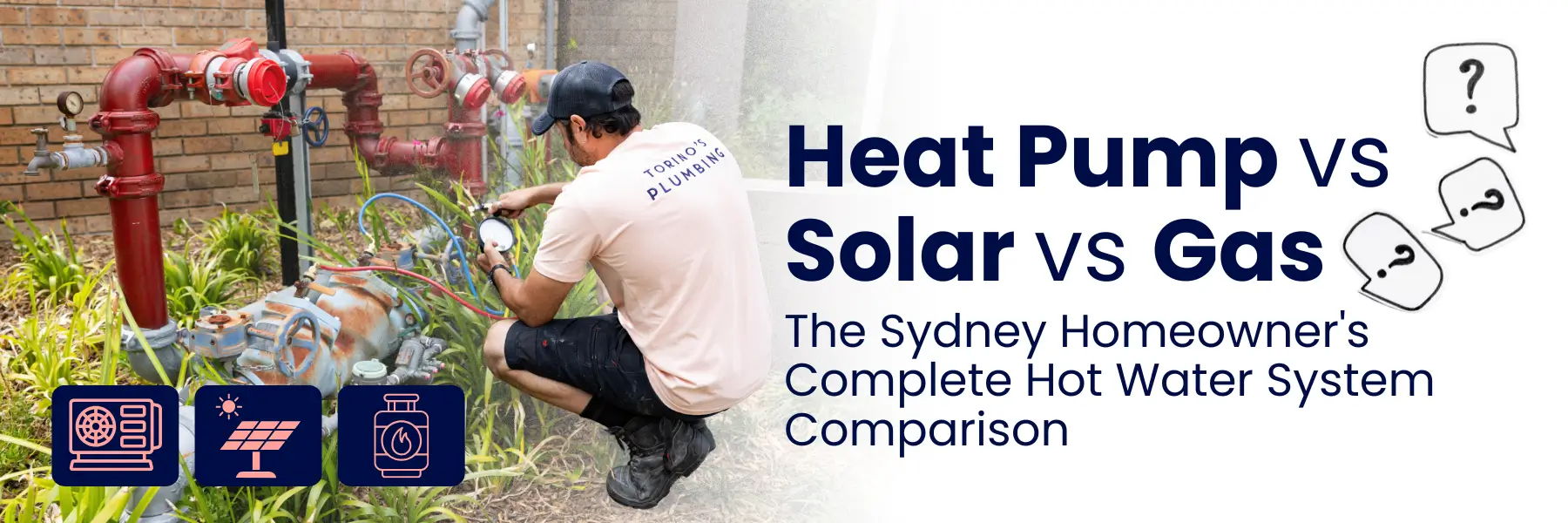
This guide covers how each major system type works, what they cost to run and maintain, how Sydney’s climate factors in, and which option suits which kind of household.
Why Your Hot Water System Choice Matters More Than Ever
It’s not just about comfort. The system you choose today will run in your home for the next 10 to 20 years, affecting your energy bills every single quarter.
The good news for Sydney homeowners is that two major government incentive schemes — the federal Small-scale Technology Certificates (STCs) and the NSW Government’s Energy Savings Scheme (ESS) — currently allow eligible households to combine both rebates when upgrading to a heat pump or solar hot water system. Together, these incentives can reduce your upfront cost by $700 to $1,900 depending on your system and location, with the bulk of the process handled by your accredited installer on your behalf. (Source: Solar Choice, updated May 2025.)
Both schemes are time-sensitive. STC values reduce each year, and the ESC component of the NSW scheme has already dropped considerably from its peak. If you’re considering an upgrade, there is a real financial case for acting sooner rather than later.

How Each System Works — Simply Explained
Heat Pump Hot Water Systems
A heat pump works like a reverse air conditioner. Rather than generating heat directly, it extracts warmth from the surrounding air and uses it to heat water stored in a tank.Because it moves heat rather than creates it, a heat pump uses around 60–75% less electricity than a conventional electric storage system to deliver the same amount of hot water. (Source: Sustainability Victoria)
- Runs primarily on electricity — no gas connection required
- Most effective in ambient temperatures above 5°C (well within Sydney’s range year-round)
- Typically installed outdoors or in a well-ventilated space
- Produces some operational noise — worth considering for apartment or townhouse installations
- Lifespan: approximately 10–15 years with regular servicing
Solar Hot Water Systems
Solar hot water uses roof-mounted collectors to capture heat from sunlight and transfer it to a storage tank. A gas or electric booster kicks in during periods of low sunlight or high demand.
- Extremely low running costs when sun is available
- Requires adequate north-facing roof space and minimal shading
- Two variants: flat-plate collectors (common in Sydney) and evacuated tube systems
- Gas-boosted solar systems are not currently eligible for NSW ESC rebates — only electric-boosted systems qualify
- Lifespan: 15–20 years for the tank; solar collectors may need attention sooner
Gas Hot Water Systems — Storage and Continuous Flow
Gas systems remain popular across established Sydney suburbs where natural gas infrastructure is well connected. Storage units keep a tank of hot water heated continuously, while continuous flow (instantaneous) units heat water on demand as it passes through the unit.
- Continuous flow gas systems offer effectively unlimited hot water
- Running costs depend heavily on current gas prices, which have risen significantly in NSW over the past two years
- No reliance on electricity (ideal during grid outages, with an ignition workaround)
- Continuous flow systems have a longer lifespan — up to 15–20 years
- New gas connections in NSW are increasingly restricted under state planning policy; existing connections are unaffected

Hot Water System Comparison: At a Glance
| System Type | Upfront Cost (installed) | Approx. Annual Running Cost | Lifespan | Efficiency |
| Electric Storage | $800 – $1,500 | $600 – $900 | 8–12 years | Low |
| Gas Storage | $1,200 – $2,200 | $350 – $600 | 8–12 years | Moderate |
| Gas Continuous Flow | $1,500 – $3,200 | $300 – $550 | 15–20 years | Moderate–High |
| Heat Pump | $2,500 – $4,500 (before rebates) | $150 – $300 | 10–15 years | Very High |
| Solar (electric-boosted) | $3,500 – $6,000 (before rebates) | $100 – $250 | 15–20 years | Very High |
Costs are indicative estimates for Sydney metro installations and will vary based on brand, size, and site specifics. Always obtain a written quote from a licensed plumber.
The Sydney Climate Advantage
Sydney’s climate sits in a particularly advantageous zone for both heat pumps and solar hot water systems. Mild winters — average July minimums around 8–9°C across most of the metropolitan area — mean heat pumps rarely operate in conditions that significantly reduce their efficiency. Compare this to Melbourne or the Southern Highlands, where winter performance can be noticeably affected.
For solar systems, Sydney’s solar irradiance levels are strong year-round. Even during overcast winter periods, a well-sized electric booster ensures reliable supply without dramatically increasing running costs. In practical terms, Sydney households get close to the maximum benefit from both technologies — something that isn’t universally true across Australia.

NSW Rebates Explained: ESS + STCs
Here’s how the two main incentive schemes work for Sydney homeowners:
- STCs (Small-scale Technology Certificates): A federal scheme available across Australia. Eligible heat pump or solar hot water installations generate certificates based on the system’s projected energy savings. Your installer typically assigns these to a certificate agent, who applies the value as an upfront discount on your invoice.
- ESCs (Energy Savings Certificates): A NSW-specific scheme administered under the Energy Savings Scheme. When you replace an existing gas or electric storage system with an eligible heat pump or electric-boosted solar unit, your Accredited Certificate Provider (ACP) calculates the energy savings and applies the resulting certificate value as a point-of-sale discount.
- You can combine both. An eligible heat pump upgrade replacing a standard electric storage system can attract combined STC and ESC savings of $700 to over $1,900, depending on the model, your location’s climate zone, and current certificate values.
- Important: ESC values have declined from their peak and STC values reduce each January. Check with your installer for current certificate values before committing.
- You don’t apply directly. Your accredited installer handles the paperwork. Ask any quote to clearly itemise the gross system cost, the rebate/certificate deductions, and your final out-of-pocket price.
Which Hot Water System Suits Your Household?
There’s no single right answer — the best system genuinely depends on your home, your usage, and your priorities. Here’s a neutral breakdown:
- Single person or couple in an apartment: A compact heat pump or electric continuous flow unit is usually the most practical option. Roof space is limited and gas connections may not be available.
- Family of 4+ in a freestanding home with north-facing roof: Solar hot water (electric-boosted) offers the lowest long-term running costs and strong rebate eligibility. Pair with a correctly sized tank — undersizing is the most common and costly mistake.
- Household with existing gas connection and no plans to install solar panels: A continuous flow gas system remains cost-effective and offers unlimited hot water. Gas infrastructure costs in existing homes are manageable; in new builds or where no gas line exists, connection costs can make this option less attractive.
- Environmentally-focused household wanting maximum efficiency: A heat pump system offers the best balance of high efficiency, manageable upfront cost (post-rebate), and flexibility — it doesn’t require roof space or gas.
- Strata apartment or unit: Strata arrangements add complexity to solar installations. Heat pumps are often more practical, but placement (noise, ventilation) needs to be assessed by a licensed plumber with strata experience. Torino’s Plumbing provides specialist strata plumbing services across Sydney, including hot water system advice and installation in multi-unit settings.
Hidden Costs Most Sydney Homeowners Overlook
The comparison doesn’t end at the sticker price. Several factors can significantly affect your total cost of ownership:
- Booster electricity costs: Solar and heat pump systems both rely on a booster during periods of low sun or peak demand. An oversized tank or a poorly positioned booster tariff can quietly erode your efficiency gains.
- Servicing and maintenance: Heat pumps should be serviced every two years. Solar systems require periodic checks of collectors, anodes, and pressure relief valves. Gas systems need biennial gas safety checks. Skipping these doesn’t just void warranties — it shortens system life.
- Wrong tank size: A 160L tank for a family of five will cost more to run than a correctly sized unit, because the booster activates more frequently. Conversely, an oversized tank wastes energy keeping water hot that nobody uses.
- Installation complexity: Changing system types — for example, from gas storage to heat pump — can involve electrical upgrades, new pipework, and compliance certification. These add to the total job cost and should be scoped properly in advance.
Common Mistakes to Avoid
- Choosing on upfront price alone. The cheapest installed system is rarely the cheapest to run over a decade. Factor in running costs and lifespan.
- Ignoring rebate eligibility before purchasing. Some systems attract far more in STC and ESC value than others. This can make a higher-quality unit more affordable than a cheaper model once rebates are applied.
- Not checking if your installer is an Accredited Certificate Provider. Only ACPs can process ESC rebates. Not all plumbers are registered — always confirm before signing.
- Replacing like-for-like out of habit. A failing electric storage unit is often a good opportunity to upgrade to a heat pump at a net cost that, post-rebate, is only marginally higher.
- Underestimating installation lead times. During busy periods in Sydney — particularly after winter cold snaps spike demand — quality installers are often booked days or weeks out. Planning ahead avoids emergency callout costs.
Signs Your Current Hot Water System Needs Replacing
If you’re not sure whether to repair or replace, look for these signals:
- The system is more than 8–10 years old (storage systems) or 12+ years (continuous flow)
- Rusty or discoloured hot water from taps
- Water pooling at the base of the unit
- Running out of hot water faster than usual — sediment build-up is likely reducing effective tank capacity
- Energy bills increasing despite no change in household usage
- Unusual noises — rumbling suggests sediment; hissing may indicate a pressure issue
- Repeated need for repairs in a short window
Any combination of these signs in an ageing system is a strong argument for replacement rather than another repair.
Talk to a Licensed Sydney Plumber Before You Decide
The right hot water system for your home depends on factors a comparison table can only partially capture — your roof orientation, gas connection status, household size, daily usage patterns, and the specifics of your electrical switchboard all play a role.
Torino’s Plumbing provides hot water system assessments, supply, and installation across Sydney — from heat pump and solar upgrades to instantaneous gas hot water systems and heat pump installations. Our licensed plumbers can advise on your rebate eligibility, size the right system for your household, and handle the full installation to Australian compliance standards.
No callout fee. Honest, upfront pricing. Contact Torino’s Plumbing today to book an assessment or get a quote.
Frequently Asked Questions
Q1: What is the most energy-efficient hot water system in Sydney?
Heat pump and solar hot water systems are the most efficient options. Both use significantly less electricity than standard electric storage units and qualify for NSW and federal government rebates to reduce upfront costs.
Q2: Can I combine NSW ESS rebates and federal STCs for a hot water upgrade?
Yes. Eligible NSW homeowners replacing an old electric or gas system with an approved heat pump or electric-boosted solar unit can combine both rebates, reducing upfront costs by $700 to $1,900 depending on the system and certificate values at the time of installation.
Q3: How do I know if my hot water system needs replacing?
Key signs include the system being over 8–10 years old, rusty or discoloured water, pooling around the base, running out of hot water faster than usual, or unexplained increases in energy bills.