You’ve probably glanced at your gas stove a thousand times without thinking twice. But if the flame burning beneath your pot is yellow or orange rather than a crisp, steady blue, that’s not a minor quirk or a dirty burner. It’s your appliance telling you that carbon monoxide — an odourless, colourless, and entirely invisible gas — may already be building up in your kitchen.
This is not a drill, and it’s not something you can put off until the weekend. Carbon monoxide poisoning is one of the most underreported domestic hazards in Sydney, precisely because victims rarely know it’s happening until they’re already in trouble. Let’s talk about what that yellow flame means, what it’s doing to your body, and what you need to do right now.
What a Yellow Flame Actually Means: Incomplete Combustion and Carbon Monoxide
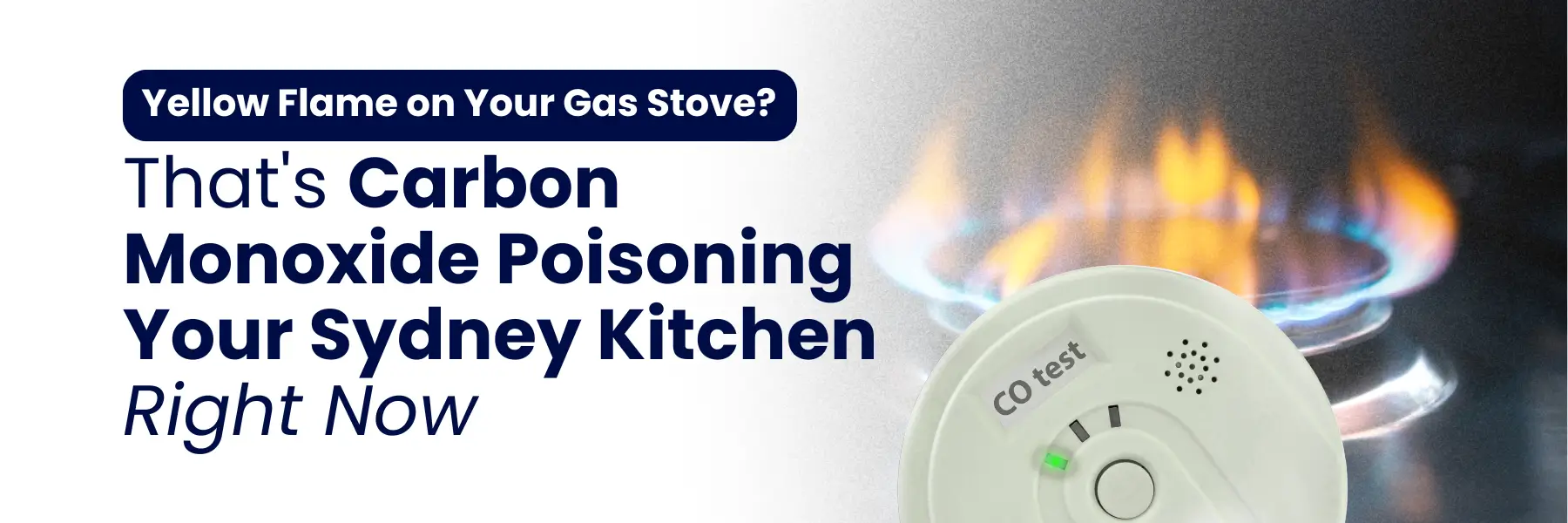
A healthy gas burner burns blue. That blue colour tells you the gas is combusting fully — oxygen and fuel combining cleanly. When that flame turns yellow or orange, the combustion process is incomplete. Unburnt carbon particles are being released into your kitchen air, and along with them, carbon monoxide (CO).
Carbon monoxide is produced whenever any gas appliance — your stove, heater, or hot water system — burns fuel without adequate oxygen or in a poorly maintained state. It doesn’t smell. It doesn’t sting your eyes. You can’t taste it. And by the time most people realise something is wrong, they’re already experiencing the early effects of poisoning.
A yellow flame is not always a sign of catastrophic failure — it can result from a clogged burner, a misaligned gas jet, or a ventilation issue. But every one of those causes deserves immediate professional attention. None of them are safe to ignore.

You’re Being Poisoned and Don’t Know It: The Symptoms Sydney Homeowners Miss
This is where carbon monoxide becomes genuinely dangerous. Its early symptoms are almost identical to a common cold or mild flu — which means many Sydney families spend days or even weeks dismissing the warning signs as something else entirely.
Watch for these symptoms, especially if multiple people in the household experience them at the same time:
- Persistent headaches, particularly after time spent in the kitchen or living areas
- Nausea or an unsettled stomach with no clear dietary cause
- Unexplained dizziness or light-headedness
- Fatigue that feels disproportionate to your activity level
- Mild confusion, difficulty concentrating, or a foggy mental state
- Symptoms that improve noticeably when you leave the house and return when you come back
That last point is the key diagnostic clue. If you feel unwell indoors and better outdoors, CO exposure should be your first consideration — not a lingering virus.
Children, elderly residents, and anyone with a pre-existing cardiac or respiratory condition are significantly more vulnerable to harm at lower concentrations. Don’t wait for severe symptoms before acting.
Why Modern Sydney Apartments Are Particularly at Risk
Sydney’s housing landscape has changed dramatically over the past decade. High-density apartment living — particularly in the eastern suburbs, inner west, and the CBD fringe — brings with it a specific set of gas safety risks that older, freestanding homes rarely faced to the same degree.
Modern apartments are designed to be thermally efficient, which means they’re well-sealed. Windows are double-glazed. Gaps are draught-proofed. In a well-ventilated home, a slightly faulty gas appliance might produce CO that disperses before reaching dangerous concentrations. In a tightly sealed apartment, that same appliance can raise indoor CO levels to harmful thresholds surprisingly quickly.
There’s an additional complication in strata buildings: exhaust fans. Running the kitchen rangehood or bathroom extractor while a gas heater is operating can create negative pressure inside the unit — effectively pulling combustion gases back into the living space rather than allowing them to vent outside. This is a documented cause of CO poisoning in Australian homes, and it’s far more common in compact apartments than people realise.
If you’re in a strata-managed building and concerned about gas appliance safety across common areas or multiple units, Torino’s Plumbing provides specialist strata plumbing services across Sydney, including gas safety compliance work.
It’s Not Just Your Stove: Gas Appliances Silently Putting Families at Risk
The gas stove is the most visible culprit, but it’s rarely the only one. Any gas-burning appliance in your home is capable of producing carbon monoxide if it’s malfunctioning, poorly maintained, or inadequately ventilated. That includes:
- Gas heaters — both flued and unflued wall units, which are common in older Sydney homes and apartments
- Gas hot water systems — especially older storage units that haven’t been serviced in years
- Instantaneous gas hot water units — particularly if installed in enclosed or semi-enclosed spaces without proper ventilation
- Gas ovens — often overlooked because they’re used less frequently than stovetop burners
According to the Australian Institute of Health and Wellbeing, 230 people across Australia were hospitalised in 2021/2022 due to accidental poisoning from gases and vapours including carbon monoxide. (Source: SBS News, July 2024.) That figure almost certainly understates the true scale of the problem, since mild and moderate poisoning cases frequently go undiagnosed or are attributed to other causes.
Gas hot water systems deserve particular attention. Many Sydney homes have units that have been operating for a decade or more without a professional service check. An ageing or corroded heat exchanger doesn’t just reduce efficiency — it can allow combustion gases to enter the water supply or vent into enclosed spaces. If your hot water system is connected to a gas supply and hasn’t been professionally inspected recently, it warrants a look. Torino’s Plumbing handles gas hot water system servicing and repairs across all of Sydney.
Why “I’ll Just Not Use It for Now” Is the Wrong Answer
One of the most common responses when a homeowner notices a yellow flame or suspects a gas issue is to stop using the appliance and leave dealing with it until later. It’s understandable. You’re busy. The stove is switched off. Surely the risk disappears with it?
It doesn’t. Here’s why:
- CO lingers. Carbon monoxide already present in your home doesn’t simply dissipate when you turn off the appliance. In a poorly ventilated space, it can remain at elevated levels for hours.
- Other appliances may still be active. Your gas hot water system doesn’t switch off when you stop cooking. Your gas heater doesn’t know you’ve decided to take a cautious approach to the stove. CO from multiple sources compounds.
- The underlying fault is still there. Turning off the stove addresses none of the causes — a blocked burner, a damaged heat exchanger, a failing gas regulator, or inadequate ventilation. The next time any gas appliance in your home fires up, the same risk is present.
- You can’t assess the severity yourself. Without a calibrated CO detector, you have no way of knowing whether levels in your home are at nuisance levels or at concentrations that pose genuine health risk.
The correct response to a suspected carbon monoxide issue is to ventilate the space immediately, leave if you feel unwell, and contact a licensed gas fitter. Torino’s Plumbing offers 24/7 emergency plumbing and gas services across Sydney with no callout fee.
What to Do Right Now: A Practical Safety Checklist
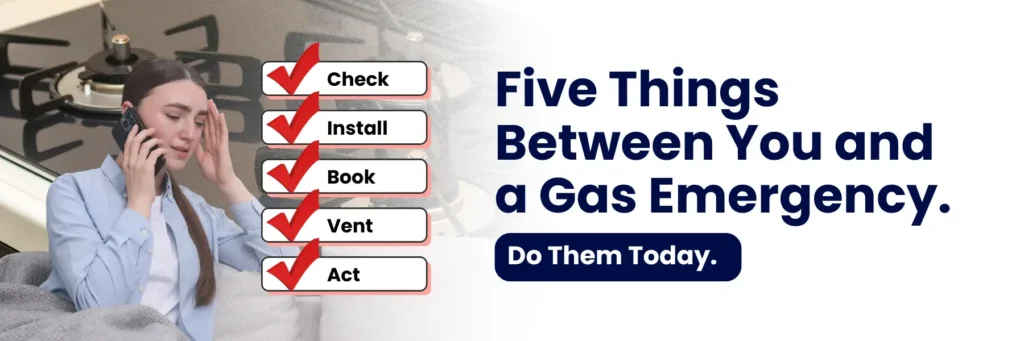
If anything in this article has prompted concern, here’s a clear, prioritised action list:
- Look at your flames today. Every gas burner should produce a steady, predominantly blue flame. Yellow, orange, or uneven flames require professional inspection.
- Install a CO detector. Carbon monoxide alarms are available at most Australian hardware stores for around $50. Place one in any room with a gas appliance and one in each sleeping area.
- Book a gas appliance service. NSW Health and gas safety authorities recommend gas appliances be inspected by a licensed gas fitter at least every two years — more frequently for older units.
- Check your ventilation. Ensure rangehoods vent to the outside (not just recirculate air), and avoid running exhaust fans simultaneously with gas heaters in sealed spaces.
- If you suspect active poisoning: Get everyone — including pets — outside immediately, call 000 if anyone is unwell, and do not re-enter until a licensed professional has cleared the property.
For gas appliance installation, safety inspections, and repairs across Sydney, Torino’s Plumbing’s licensed gas fitting team covers everything from stove connections and heater servicing to full gas safety compliance checks — with over 15 years of experience and honest, upfront pricing.
The Bottom Line
A yellow flame is a small thing. It’s easy to dismiss, easy to live alongside, easy to forget about after a busy morning. But it’s a signal worth taking seriously — one that can mean the difference between a routine service call and a genuine medical emergency.
You don’t need to be alarmist about gas safety. You just need to be informed. Know what a healthy appliance looks like, recognise the early symptoms of CO exposure, and make sure your gas appliances are serviced by a licensed professional on a regular schedule.
If you’re in Sydney and need a gas safety inspection, a faulty appliance assessed, or an emergency callout, contact Torino’s Plumbing today. No callout fee. Available day and night.
Frequently Asked Questions
Q1: What does a yellow flame on a gas stove mean?
A yellow or orange flame indicates incomplete combustion, meaning the burner is not burning gas efficiently. This can produce carbon monoxide. It requires inspection by a licensed gas fitter promptly.
Q2: What are the symptoms of carbon monoxide poisoning at home?
Symptoms include persistent headaches, nausea, dizziness, fatigue, and confusion — often mistaken for flu. A key sign is feeling better when you leave the house and worse when you return.
Q3: How often should gas appliances be serviced in NSW?
Gas safety authorities recommend a professional inspection by a licensed gas fitter every two years. Appliances over ten years old should be checked annually to ensure safe operation and CO compliance.